
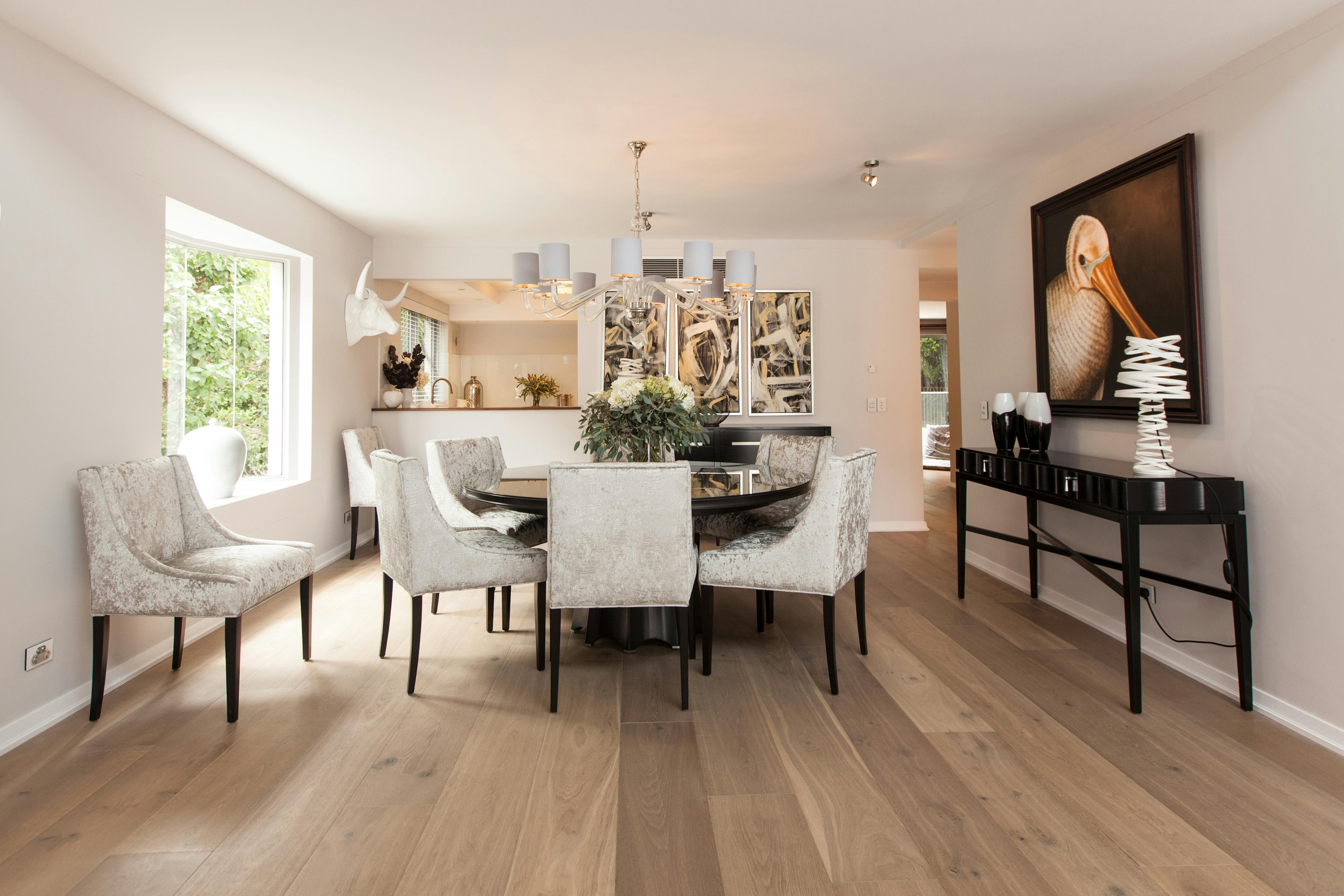
If you've spent any time looking into new floors, you've probably run into the hardwood vs. engineered hardwood debate. And honestly, alot of the information out there is either overly technical or just plain misleading. We've been installing both types across Bucks County for over 15 years, so I wanted to break down what actually matters — from someone who sees these floors perform in real homes, not just on a spec sheet.
First Things First: Both Are Real Wood
This is the biggest misconception we deal with. People come to us thinking engineered hardwood is some kind of fake flooring, like laminate with a fancy name. It's not. Engineered hardwood has a real wood top layer — usually between 2mm and 6mm thick — bonded to a plywood or HDF core. When you're standing on it, looking at it, walking across it barefoot, you're looking at and feeling actual hardwood. Because it is.
Solid hardwood is exactly what it sounds like: a single piece of wood, typically 3/4 inch thick, all the way through. It's been the standard for centuries and there's a reason for that. The stuff lasts practically forever if you take care of it.
So Why Would Anyone Choose Engineered?
Here's where it gets interesting, and where the answer depends heavily on your specific home. See, wood moves. It expands when humidity goes up and contracts when it drops. That's just physics. And in southeastern Pennsylvania, we get real humidity swings — humid summers, dry winters with the heat running. Solid hardwood handles this fine in most situations, but it has limitations.
Concrete subfloors? Solid hardwood can't be glued directly to concrete. Well, technically it can, but we won't do it because it's going to cause problems down the road. Engineered hardwood was literally designed for this situation. The cross-layered core resists expansion and contraction way better than a solid plank.
Basements? Same deal. Below-grade installation is engineered territory. We've seen people try solid hardwood in a finished basement and call us 18 months later to rip it out because it cupped and buckled. Not a fun call to get.
Radiant heat? Engineered handles it beautifully. Solid hardwood and radiant heat are a bad combination — the heat dries the wood unevenly and you end up with gaps you could lose a quarter in.
The Refinishing Question
This is where solid hardwood has a real, genuine advantage. A 3/4-inch solid plank can be sanded down and refinished 5 to 7 times over its lifespan. That means a floor installed today could realistically last 100+ years with periodic refinishing. It's the most sustainable flooring choice you can make, honestly.
Engineered hardwood can be refinished too, but the number of times depends on that top layer thickness. A 2mm veneer? Maybe once, very carefully. A 6mm veneer? Two to three times, no problem. This is why we always recommend looking at the wear layer thickness, not just the total plank thickness, when shopping for engineered floors.
The best flooring for your home isn't the most expensive one — it's the one that's right for your home's specific conditions.
What We See in Bucks County Homes
After thousands of installations across the area, some clear patterns have emerged. And they might surprise you.
In the older colonials and ranches around Southampton and Warminster — those 1950s and 60s homes with plywood subfloors — solid hardwood is usually the right call. These homes were built with wood framing and plywood decks. Nail-down solid oak goes in perfectly and will look incredible for decades.
In newer developments around Warrington, Jamison, and parts of Newtown, we're seeing more concrete slab construction, especially in townhomes. Engineered hardwood is the clear winner here. We typically float it over a quality underlayment, and the finished result looks identical to solid — most visitors would never know the difference.
For the historic homes in Doylestown Borough and New Hope, the answer is usually: keep what you've got. Those original wide-plank pine and oak floors have character that you simply cannot replicate. We do a lot of refinishing in those areas — sanding down 150 years of wear and bringing the original wood back to life. It's some of our favorite work, to be honest.
The Cost Difference
People always ask about price, and the answer is less straightforward than you'd think. Material costs are actually pretty comparable for mid-range options — you can spend $4 to $12 per square foot on either solid or engineered, depending on species, width, and grade.
Where the real cost difference shows up is installation. Solid hardwood requires nail-down installation, which is more labor-intensive. Engineered can be floated (click-lock), glued, or nailed — and floating installation is significantly faster. For a typical 1,000 sq ft project, the installation labor difference might be $1,500 to $2,500.
But here's what I tell people: don't make a decision based on saving a few dollars per square foot. You're going to live with this floor for 20, 30, maybe 50 years. The cost difference between solid and engineered on a per-year basis is basically nothing. Choose whichever one is right for your home's conditions.
Our Honest Recommendation
We don't push one over the other because we don't have a reason to. We install both, and we're good at both. What we do push is making the right choice for the right situation:
- Above-grade, wood subfloor, no radiant heat — go solid. You'll get maximum refinishing potential and the longest possible lifespan.
- Concrete slab, basement, radiant heat, or high-humidity areas — go engineered. It's designed for exactly these conditions and you won't sacrifice appearance.
- Budget is tight but you want real wood — engineered with a floating installation will get you real hardwood for less money, and it'll look great.
- Historic home with existing hardwood — refinish what you have. Don't tear out irreplaceable floors.
At the end of the day, both are real wood floors that will transform your home. Neither is "better" in some universal sense. One is just better for your specific house, and that's what we help people figure out during the free estimate.
If you're trying to decide between the two and want a professional opinion based on your actual home conditions, schedule a free in-home consultation. We'll look at your subfloors, measure humidity, talk about your goals, and give you an honest recommendation. No sales pitch — just straight talk from people who install floors every day.
Need Help Choosing?
We bring physical samples to your home so you can see the options in your own lighting. Free consultation, free measurement, honest advice.
Get Your Free Estimate