
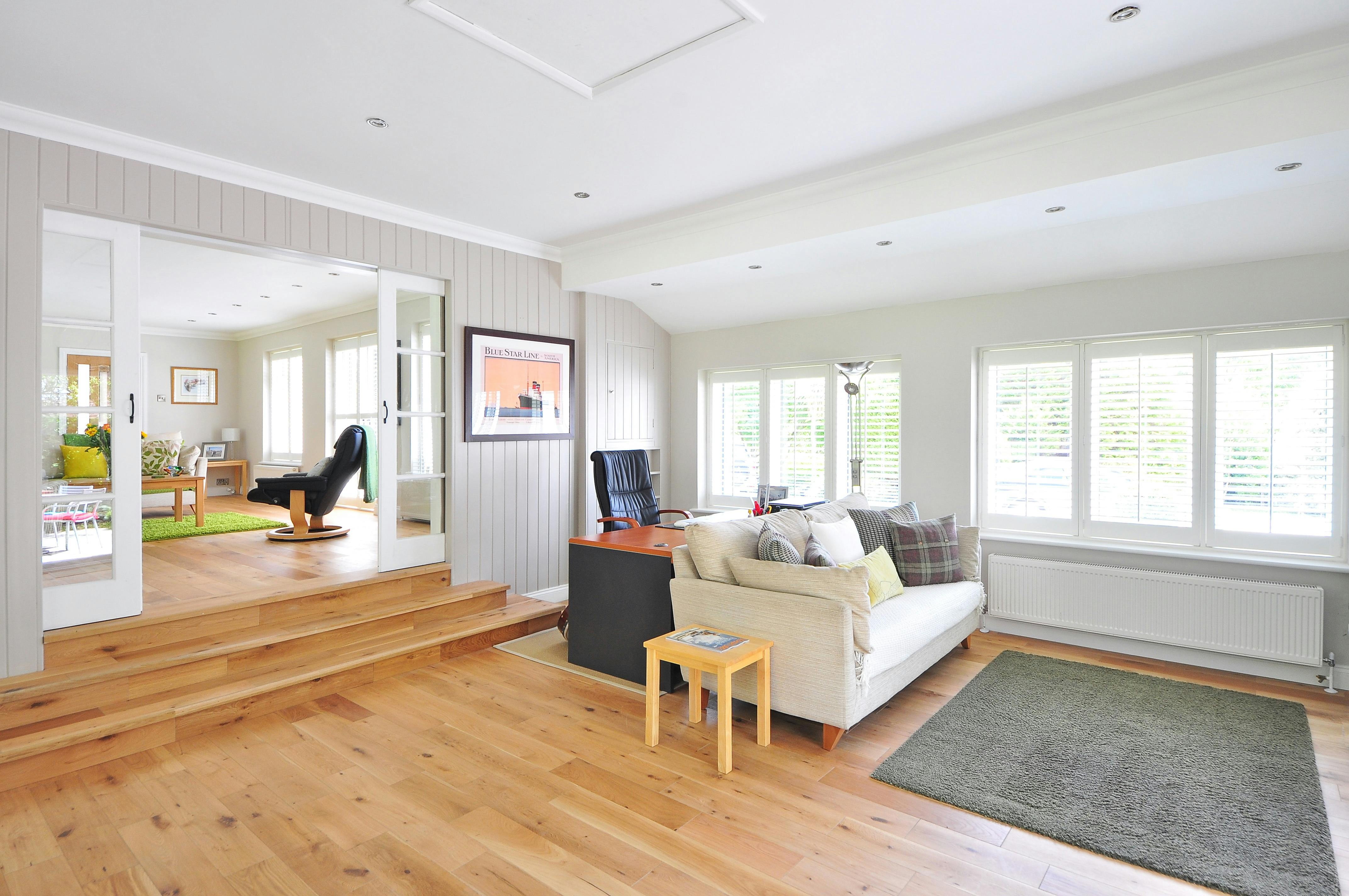
I get this question at least three or four times a week. Someones got floors that look tired — scratches all over, finish wearing thin in the hallways, maybe some water stains from a dog bowl that's been sitting in the same spot for years. And they want to know: do we refinish these or rip them out and start over?
The answer is almost always refinish. But not always. Here's how I think about it.
When Refinishing is the Right Call
If your hardwood floors are structurally sound — meaning the boards aren't warped, the subfloor underneath is solid, and there's enough wood thickness left to sand — refinishing is almost certainly the way to go. It costs a fraction of replacement and the results can be honestly transformational.
Refinishing makes sense when you're dealing with:
Surface scratches and wear. Even floors that look completely destroyed can come back. We sand through the damaged finish and into the wood — usually about 1/32 of an inch — and then build up fresh coats of polyurethane. The scratches are literally gone because we're removing the layer of wood they lived in.
Faded or discolored finish. Sun damage is incredibly common, especially near windows and sliding glass doors. You can actually see the outline of where furniture used to sit because the exposed floor faded while the covered sections didn't. Sanding and refinishing evens everything out.
You want to change the color. This is a big one. Lots of homes in the Southampton and Newtown area were built in the 80s and 90s with red oak floors finished in that amber-gold tone that was popular then. Refinishing lets you sand it down and apply a completely different stain — grey-washed, natural, dark walnut, whatever you want. Same wood, totally different look.
The boards are in good structural shape. Press on them. Walk across them. If they feel solid, don't bounce, and the boards lay flat without major cupping or crowning, you're good. Minor squeaks are normal in older homes and don't mean anything is wrong.
When Replacement Makes More Sense
There are real situations where refinishing isn't worth it. I'd rather tell you upfront than have you spend money on a refinish that doesn't hold up.
Severe water damage. I'm not talking about a stain around the dog bowl. I'm talking about floors that cupped, buckled, or warped from a pipe burst, flooding, or a long-term leak that nobody noticed. If the boards have permanently changed shape, no amount of sanding will make them flat again. They need to come out.
The wood is too thin. Solid hardwood is usually 3/4-inch thick and can be refinished five to seven times over its lifetime. But if your floors have been refinished several times already, there might not be enough wood left above the tongue-and-groove joint to sand safely. We check this during the estimate with a simple measurement. If there's less than about 1/8 inch of wood above the tongue, we'll recommend replacement.
Extensive termite or insect damage. We see this occassionally in older Bucks County homes. If insects have eaten through the wood from below, the boards might look fine on top but they're structurally compromised. Once you start sanding, they crumble. There's no fixing that.
You want a totally different flooring type. If you're going from a 2-1/4 inch red oak strip floor to a 7-inch wide-plank white oak with a completely different look, refinishing won't get you there. That's a replacement project. And there's nothing wrong with that — sometimes a home just needs a fresh start.
The Refinishing Process (What Actually Happens)
People sometimes imagine refinishing is just putting a new coat of something on top. It's a lot more involved than that. Here's the sequence:
Step 1: Furniture out, room prepped. Everything comes out. We seal off doorways with plastic sheeting to keep dust contained. Modern dustless sanding systems capture about 98% of the dust, which is a massive improvement over the way it used to be done, but we still take precautions.
Step 2: Sanding. Three passes with progressively finer grits. The first pass with a drum sander removes the old finish and a thin layer of wood. The second pass smooths out the drum marks. The third pass with a fine grit creates the smooth surface for staining. We also edge sand along all the walls and hand-sand the corners.
Step 3: Stain (if you want it). This is optional — you can leave the wood natural if you prefer. We apply the stain by hand, working it into the grain, then wipe off the excess. It needs to dry completely before finishing. We always do a test patch first so you can approve the color on your actual floor before we commit.
Step 4: Finish coats. Two to three coats of polyurethane. You've got two choices here: oil-based or water-based. Oil-based poly adds a slight amber warmth and is extremely durable, but it takes longer to dry and has a stronger odor. Water-based poly dries clear, has minimal odor, and you can usually walk on it the next day. Both are excellent. Most of our Bucks County customers go with water-based these days.
Step 5: Dry and cure. The floor is dry to the touch within hours, walkable with socks in 24 hours, and fully cured in about two weeks. We'll tell you when it's safe to put furniture back and when you can put rugs down.
What Does Refinishing Cost?
In the Bucks and Montgomery County area, hardwood floor refinishing typically runs $3 to $6 per square foot for a standard sand-and-refinish. Adding a custom stain color usually adds $1 to $1.50 per square foot. So for a 300 square foot living room, you're looking at roughly $900 to $1,800 without stain, or $1,200 to $2,250 with a color change.
Compare that to full hardwood replacement at $8 to $18 per square foot. The math is pretty clear for most situations.
A Few Things I Tell Every Customer
Don't try to screen and recoat floors that have worn completely through the finish in high-traffic areas. The bare wood won't accept the new finish the same way, and you'll end up with a blotchy, uneven result. If the finish is worn through to bare wood, you need a full sand-and-refinish.
Pet stains that have soaked through to the wood are tricky. Light stains usually sand out. Dark, deep stains sometimes don't — they can go all the way through the board. We can sometimes bleach them out, but in severe cases, we replace those specific boards and refinish the whole room so everything matches.
Don't put it off too long. Floors that have completely lost their finish are absorbing moisture, dirt, and damage directly into the wood. The longer you wait, the more material we have to sand off and the closer you get to the "too thin to refinish" threshold.
Not Sure if Your Floors Can Be Refinished?
We'll come out, assess the condition of your floors, and give you an honest recommendation — plus a written quote. It's completely free.
Schedule Free AssessmentBottom Line
Most hardwood floors in Bucks County homes can be refinished rather then replaced. It costs 50–70% less, takes 2–4 days instead of a week or more, and the results are often indistinguishable from brand new floors. The exceptions are severe structural damage, water damage that's warped the boards, or floors that have been refinished so many times there's simply not enough wood left.
When in doubt, have us come take a look. It takes 20 minutes and we'll tell you straight — refinish or replace. No charge either way.